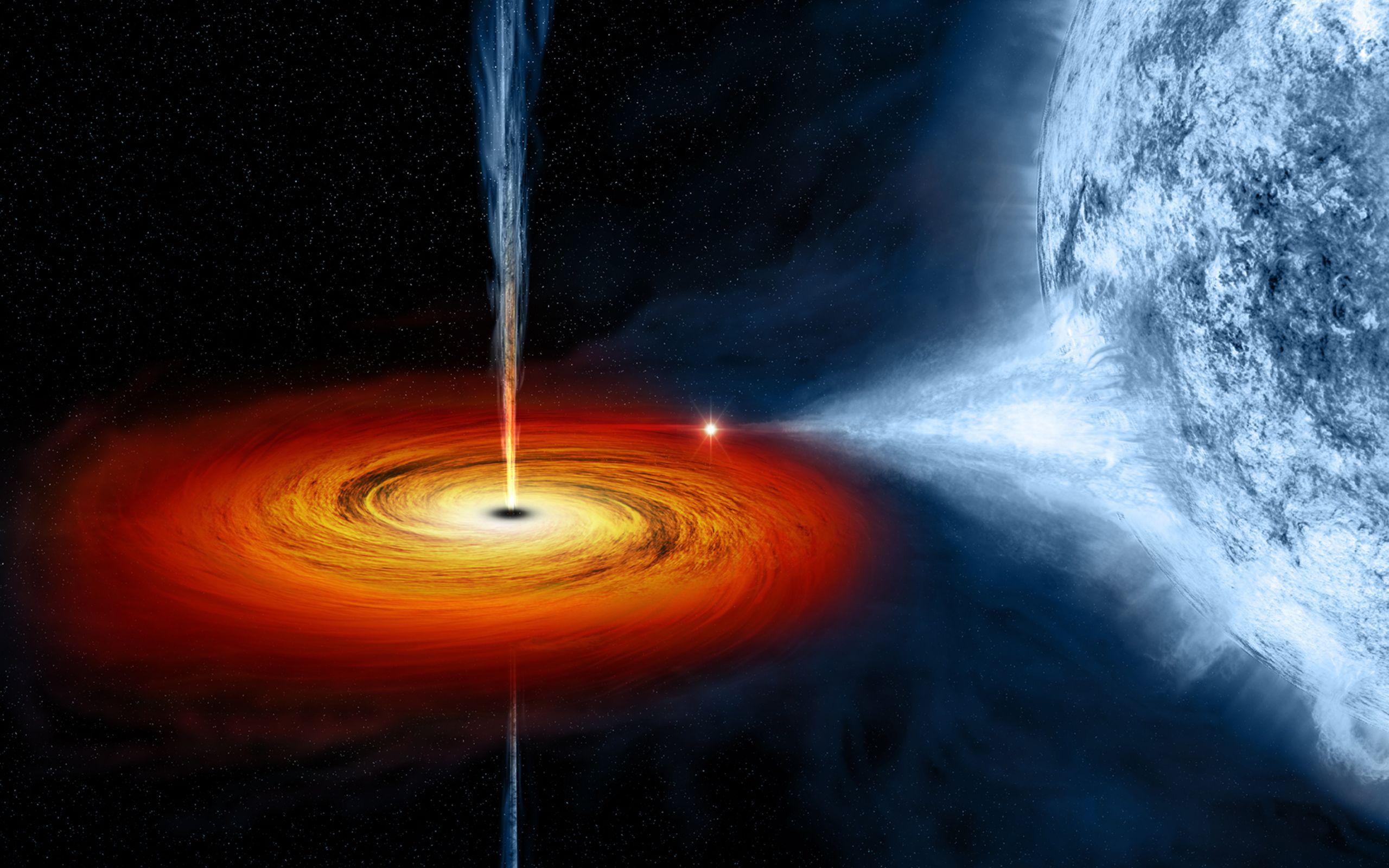
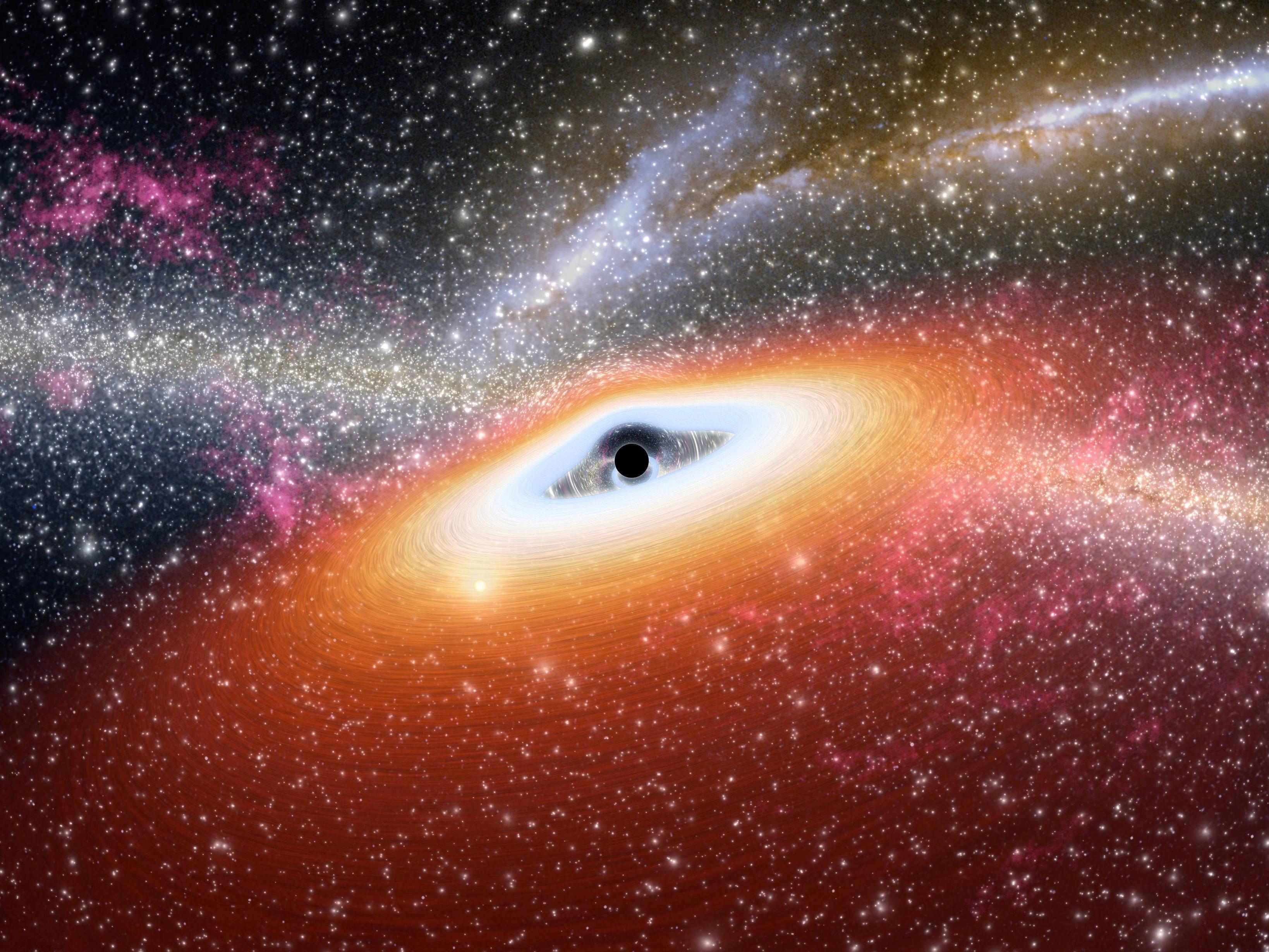
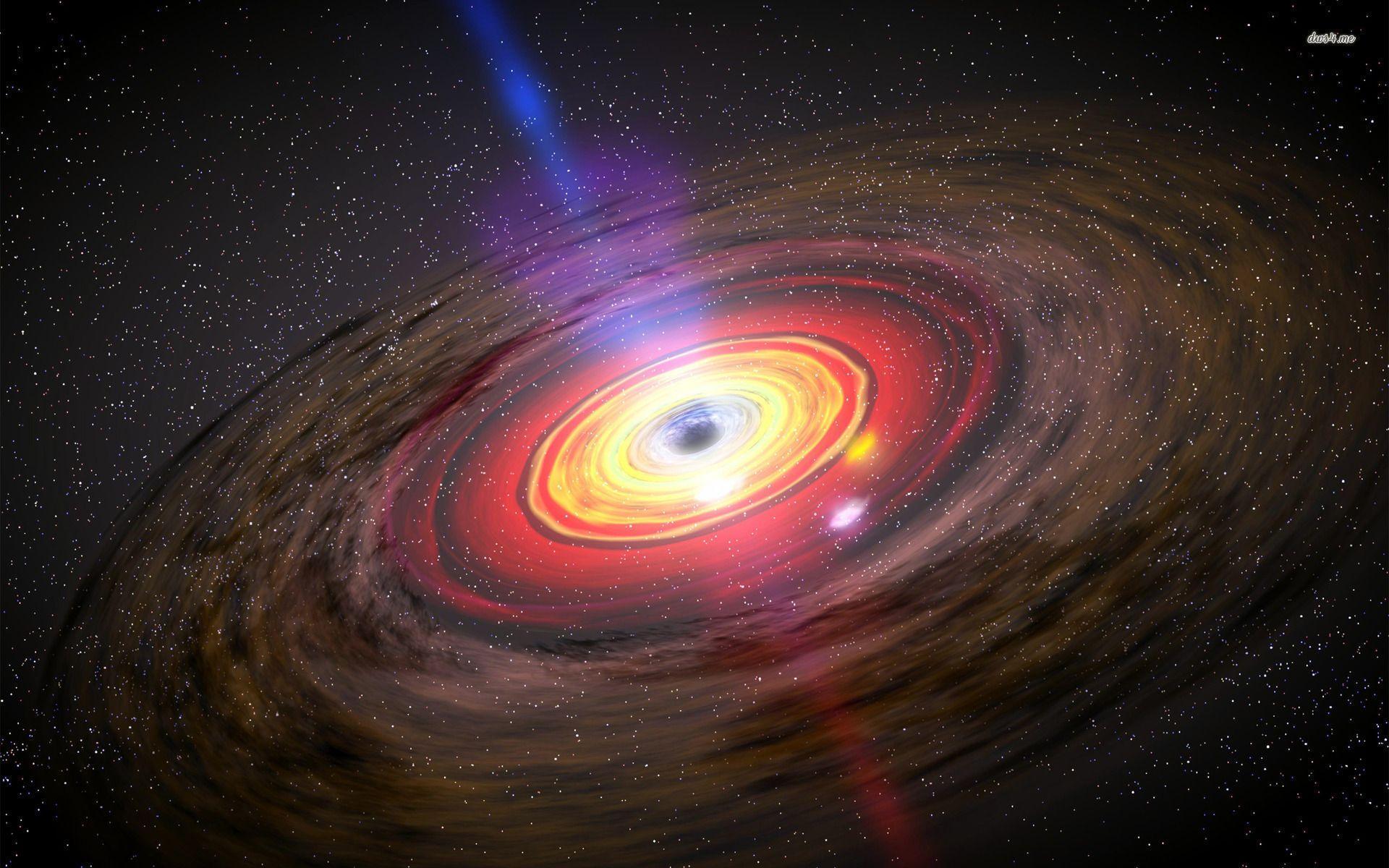

We still know how giant and strong these black holes are. This was all for about a single black hole, but now imagine what would happen if a black hole collided with another black hole of about the same mass. What will be the result of this destruction? Will it be a very huge big bang or the creation of a new beast? So, let’s find out what will happen.
Binary black holes.
 A binary black hole system is a pair of black holes revolving around a particular point that is its epicenter. So, is the collision of all the black holes the same? The answer is no, as when different sizes of black holes collide with each other, the resultant energy released is different. That is, the collision of two stellar black holes will result in a different amount of energy being released than the collision of two supermassive black holes. So, there are different types of collisions. One type of collision is the collision of two stellar black holes formed by the revolution of the remains of two heavily dense stars revolving around a particular point. Then there is the collision of two galaxies that results in the collision of two super massive black holes. So, all these black holes before colliding revolve around each other, and this system is coined as the binary black hole system.
Process of collision.

Imagine two black holes of nearly 80 solar masses each. That is the mass of 80 suns densely packed together into an area that is the size of Japan. Then what would happen is the formation of a black hole. Now, imagine two black holes, the second one similar to the first one we discussed earlier, approaching each other. What will happen? Earlier, when it was not observed, it was very difficult to locate a black hole precisely where it was and how far it was from us, because the black hole does not give any signs of its existence due to its terrible gravitational force. But when two black holes collide, an immense amount of energy in the form of gravitational waves is released in the space and time whose energy has been calculated by the use of general relativity. It is said that the collision of two black holes results in the strongest and largest production of gravitational waves. These are the only quantities that remain the same in all dimensions, so it is easy to detect them. As the gravitational waves are released, the orbit of a black hole decays, and the period of the orbit also decreases. This whole phenomenon is known as an inspiral. Once it happens, the back holes start to merge into each other, and finally a single black hole is formed. In this process, as two black holes combine, the total mass of the black hole is not the same as the addition of the masses of two black holes, as at the time of collision, a huge amount of energy is released in the form of gravitational waves. So some amount of mass is converted into energy in the form of gravitational waves and released.
So, what ones happened is….

On the 14th of September 2015, approximately 1.4 billion light-years from Earth, two black holes spiraled around each other and, after some time, collided, creating waves in the fabric of space-time. These waves, known as gravitational waves, arrived at Earth and were observed and announced by Virgo and LIGO in February 2016. The readings given by LIGO were approximately and more accurately correct and were accurate to the general relativity prediction of two massive bodies spiraling inwards towards each other, having asses approximately equal to 36 and 29 solar masses, which finally emerged into a single black hole. The signal that was detected was named GW150914, which says, Gravitational waves noticed on September 14, 2015. It was the first time an observation of the merging or collision of black holes was observed and put forward with proof. This gave a clear response that the collision of stellar black holes still occurs in this age and era. Earlier, gravitational waves had only been inferred indirectly, via their effect on the timing of pulsars in binary star systems. The news of the first direct observation was spread around the world as a remarkable achievement for many reasons. Many efforts have been made in the last fifty-five years to show the existence of such waves, and the waves are so small that Albert Einstein himself never thought that they could ever be detected. But, this gave the boost to the scientists and researchers that they needed for a long time to discover many more things about them, and the day is not so far when we could actually go near this beast.


